Friday, October 31, 2014

November/December 2014


Primary Art Class:

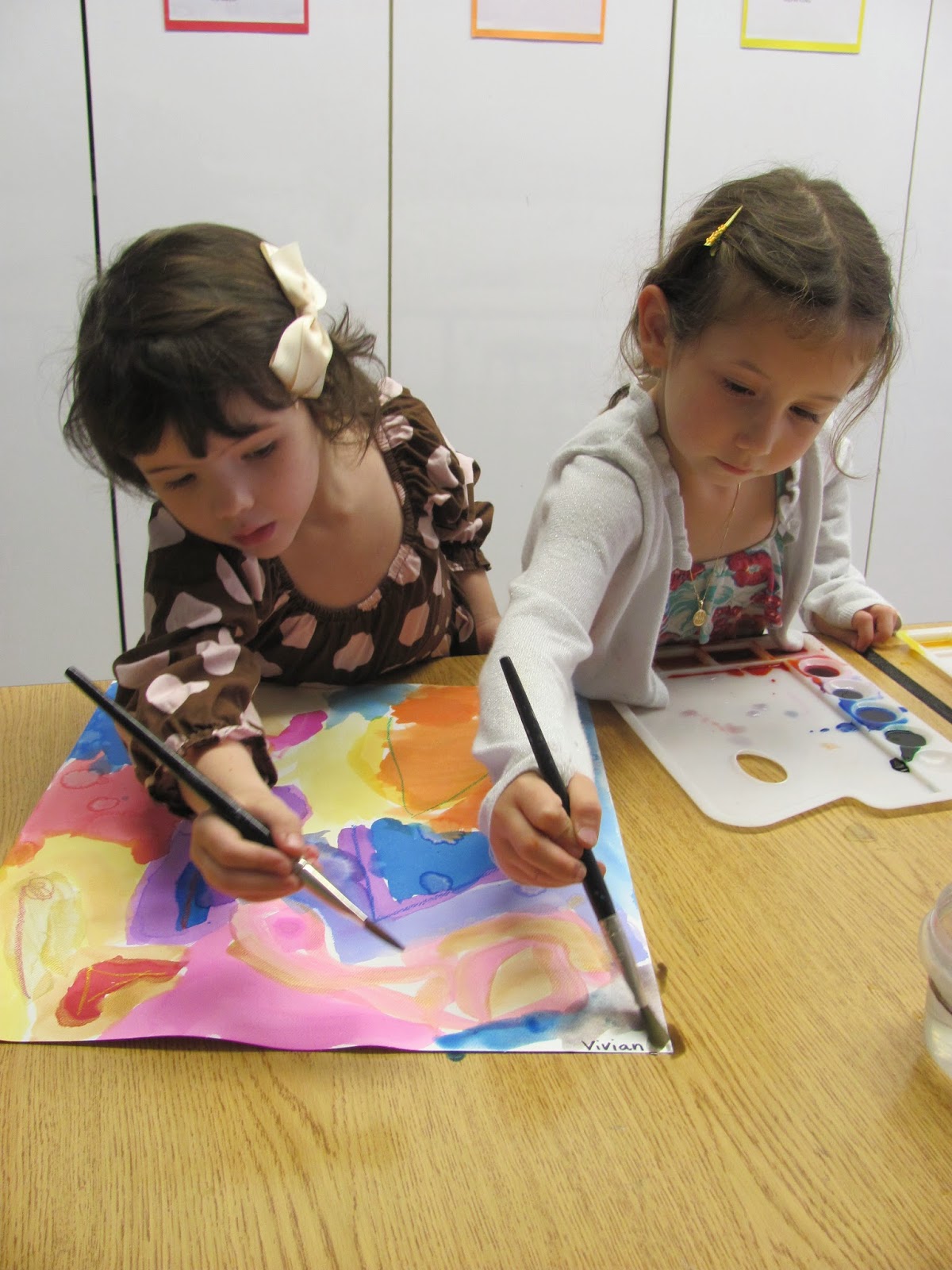
Primary art students have been exploring color through paint. In addition to using watercolor paint to "Take a Dot for a Walk" and creating "Hidden Name Paintings", they have been mixing their own colors using only red, blue, yellow and white tempera paint. Color is MAGIC!

Exploring & Observing: How do you make pink?
Has anyone figured it out? I have! Will you show us?
We made pink!
 
Expressing: I'm following the
 dot who went for a walk with my paint brush.

Developing Skills & Craft: Now that the letters from my name are hidden, I am going to hide them even
more with watercolor paint!

 
Focusing is a big part of art making.
Helping out Another (exhibiting Empathy) :
Sometimes it helps to have a friend when
 time gets tight.
Stretching & Exploring: When mixing red
with a bit of yellow she created a beautiful coral color.

Kindergarten Art Class:

Kindergarten art students have been creating art related to their studies in the classroom. Their knowledge of the ocean and it's inhabitants is demonstrated in their beautiful Mixed-Media Collages. In addition, they have been exploring watercolor and created "Hidden Name Paintings". 


Envisioning & Developing Craft: Students
created a background for their ocean collage using
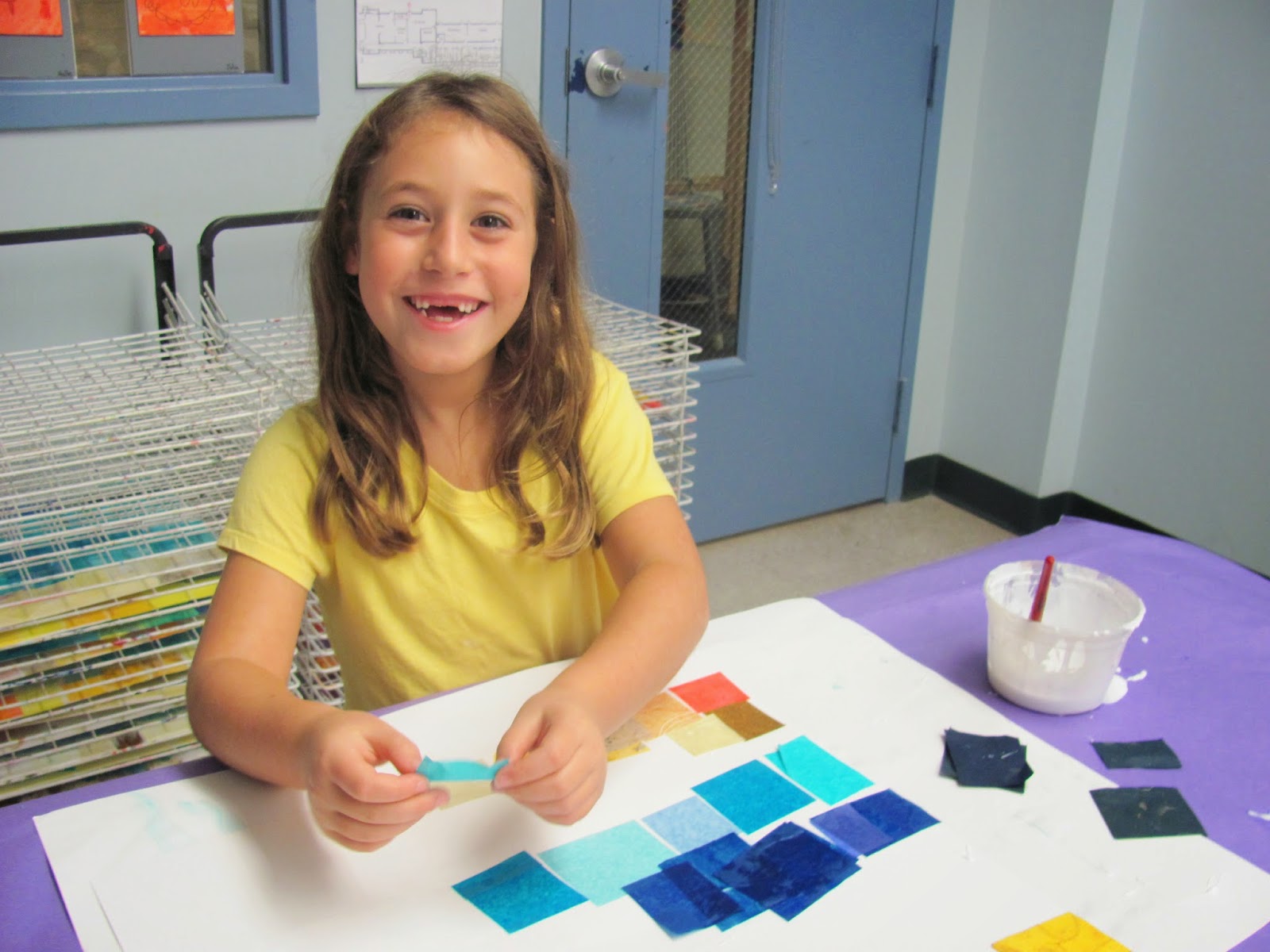
 hand made paper, hand painted paper, and tissue paper.
Concentrating & Applying Knowledge: This artist is concentrating on making his sky appear lighter when it is closer to the sand.
Engaging & Persisting: Piece by piece
the background is created.
Visualizing and Cutting
More Visualizing and Cutting
Visualizing the placement of his sea creatures,
 this artist is engaged in space and design decisions.


Making Final Design Decisions 


**************************************************************


Developing Craft: Practicing  a new skill
Visualizing: Deciding on the final placement of letters


Expressing: This artist is adding his own choice of color after
carefully "dancing" the letters of his name around the painting.


First Grade Art Class:

For several weeks the first grade artists have been working on their Fall Trees: Mixed-Media Collages. In addition to creating a background and thinking about where to place the horizon line, the students "built" their trees with hand made paper and then added branches, leaves, and berries. The fall colors are spectacular!
 
Here are some examples of the process and their final projects:


Applying New Knowledge: After discussing
the concept of a horizon line, the students
place their mosaic background pieces to
show where the ground and sky meet.

Learning Craft: The final step was to seal the collage with Mod-Podge.


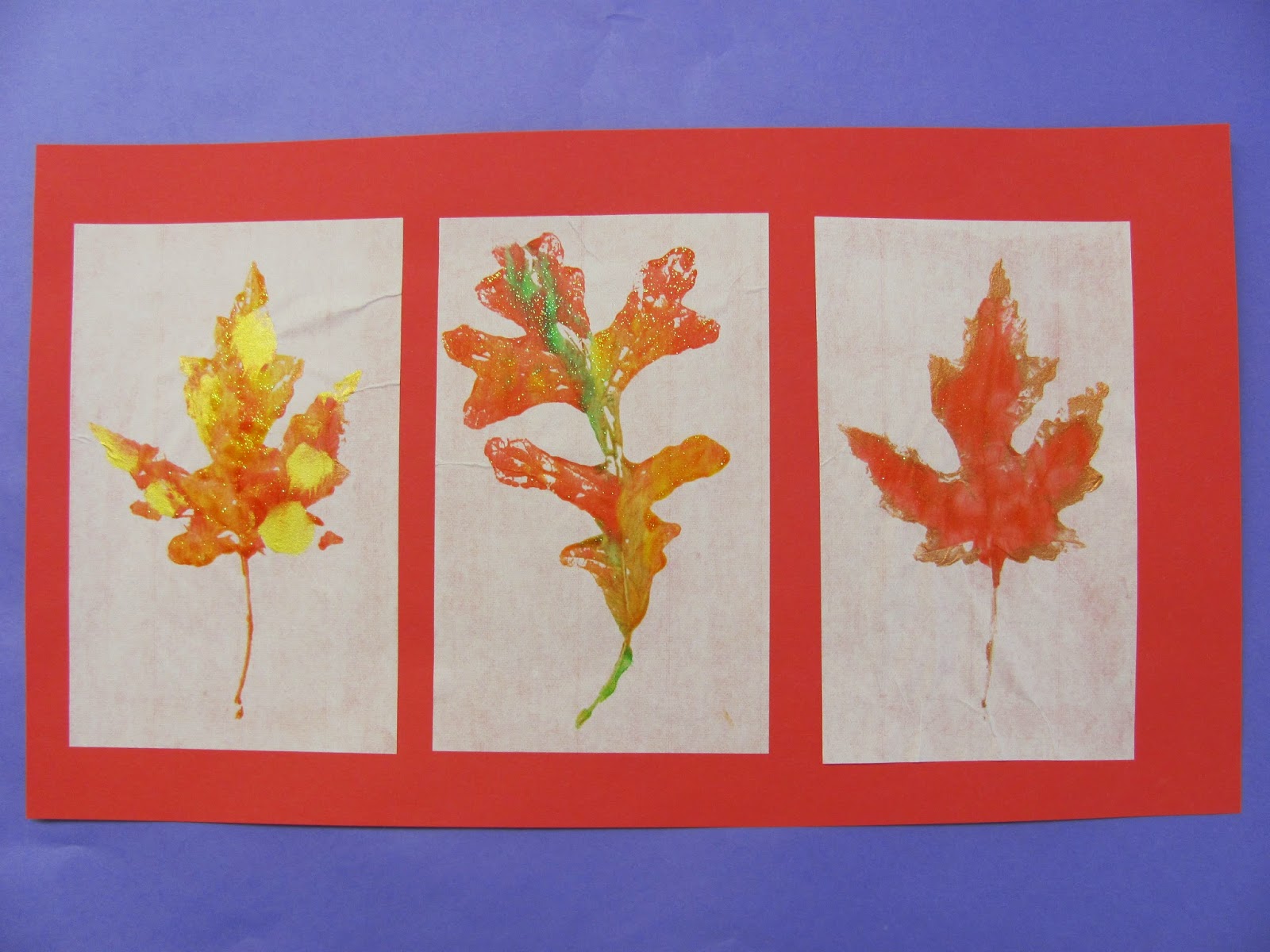
First Graders have also experienced making Leaf Mono Prints:

Carefully painting the leaf:  Everything in
 this project was about being "gentle."
Developing Craft: Handling the materials with care...
Japanese Rice Paper is delicate.


Engage and Persist: The prints needed to be "pulled"
carefully with two hands, or the print would curl up on itself.

Second Grade Art Class:

Second Grade artists have been enjoying several different mediums in art including observational drawing, mixed-media collage, painting, and print-making. Throughout these experiences they have been building on their art skills, both practical and creative. Here are some examples of their work:

Engage & Persist: After creating a face only
self-portrait, the students used collage
materials to create an entire person and
completed their work with a painted
 background.


 Express: The background gave the students
 an opportunity to give their portrait personal meaning.
 
Stretch & Explore: The students created Hidden Name
Paintings similar to those discussed earlier.
 
Decisions, Decisions...In this photo students are
making artistic decisions about what they have visualized.
They are picking materials for the backgrounds of their "Oceanscapes".
 
Engage & Persist: Creating the background
 is the first step in this multi-step process.
Developing Craft: Using scissors and
other tools help students develop skills.
 
Explore & Experiment: When making a mono print,
the students explore and experiment with
different ways to make each print.
Understanding the Art World:
Artists often work in a series...


Third Grade Art Class:

The third graders have enjoyed many projects throughout the fall including experiences with observational drawing, painting, collage, and 3-D construction. The highlight for them was the creation of Haunted Houses for Halloween! Before starting the project the students discussed the organizational skills that go into multi-step projects. For example, they were challenged to think in advance about the planning process: How would they Plan, Organize, Prioritize, Self-Monitor, and maintain Sustained Focused Attention throughout several weeks. They completed a written plan and sketch before starting their house. Here are some photos from the project:
 
Making the plan and sketch
Using their Working Memory: Third graders
had recently participated in the Cardboard Challenge
and applied those newly acquired skills to this project while working with similar materials.
Envisioning and making that vision come to life

Developing Craft: Measuring distances

Stretch and Explore: Attaching pieces...
trial and error and success!
Visualization coming to life! Now the creator can
really begin to see the final product of his efforts!

Problem Solving: Tape is a wonderful invention
Concentration, problem solving,
and decision making move
the process along.
Persistence: Solving the problem of
attaching the tube took several attempts.

Express: Watch out, I'm sure she
has something quite scary in mind!


Having Fun: Not Allowed !!!
 
*******************************************************************************  
All School News: We will be starting our School-Wide Project in November: Shadow Boxes. Please remember to discuss this project with your children and help them decide what to bring from home. There is more information about this in my last post.

For students interested in MOREART:

  • The Afterschool Winter & Spring Sessions for MOREART will be combined into one Registration Form this year. These forms will be sent home on Thursday, November 13th in student's backpacks. There will be extra forms in the main office. MOREART is offered to K-3rd grade students and meets on Monday after school from January 5- April 20th, with no class on 1/19.

  • MOREART Summer Sessions will meet for three sessions between June 22 and July 10. The registration forms will be available later in November. This program is for students entering grades 1-4 in the fall of 2015.


Tuesday, September 16, 2014

Fall 2014


All School Information:

Welcome to CHS and another year of exciting art experiences! We started off the year with Self-Portraits and learning to really LOOK into the mirror and draw what we see (as opposed to what we imagine in our minds). One student observed, "My eyes are really much bigger than I usually draw them; I usually make dots!"


In the ARTNOTES @ CHS Blog I post information about the Art Program at CHS, photos of our young artists at work, and examples of their artwork.

Throughout the year the art curriculum revolves around:
  • Basic art concepts such as line, color, shape, space, texture, etc.
  • Experiments with a variety of art materials including oil pastels, colored pencils, watercolor/tempera/acrylic paint, markers, crayons, fabric, yarn, thread, and more
  • Experiences with a variety of expressive techniques such as drawing (individual/collaborative, observational/imaginative), painting, collage, mixed-media, clay and sculpture, printing, weaving, stitching and more
  • Projects inspired by the classroom curriculum
  • Collaborations focused on all-school themes
************************************************************************************************

This year our all school theme will be The Shadow Box Project: What's in a Name?
We will be making individual “Shadow Boxes.”  These boxes will introduce each of us and invite conversation about our similarities and differences. In addition to the student’s doing this project, several years ago the faculty worked on their own boxes; you may have noticed that the faculty boxes displayed around the school.

In art class, the students will start to make small objects for their own boxes which represent who they are, their family origins, and special interests. As we work on this project, we will talk about the work of artist Joseph Cornell and the boxes he assembled on various themes.


Our first objects will be made from Shrinky-Dinks, a special plastic paper which shrinks when it is baked. Our next activities will include making objects from wire, clay, paper, and a variety of collage materials. Later, the students will bring in a few “found objects” from home and a photo or two if possible. We will then decorate the boxes in a variety of ways, and finally assemble and display them. Everyone will make one.
Here is how you can help:
 
  • Have some conversations with your child about the Shadow Box Project.
  • Discuss what they have seen around the school in the teacher’s boxes, and what they have been making in art class to put in their own box.
  • Discuss the origins of your family and stories about their name (for example: My middle name, Elizabeth, was my grandmother’s name and is my daughter’s middle name. My grandmother was from Wales. My son’s middle name is the same as my fathers, and his initials are the same as his grandfathers, etc…)
  • Help them collect 2 or 3 small objects from home that represent their interests, pet toys, stickers, tiny animals, photos (one or two color copies of photos, baby pictures are fun and/or a family photo) that they will cut and glue. Put these in a zip lock bag labeled with their name and grade, and send them to school. Please keep in mind that these objects will be glued into the boxes, so make sure that is OK with you and your child!
  • FYI- their boxes will be  7” x  7” x  2 ½” deep
Timeline:  We will be working on the boxes starting in October, so you can send in these labeled items any time in the next two weeks. Thanks in advance for your help and support of this project!

***************************************************************************


Information About MOREART Classes:
For those of you interested in MOREART Classes, which are offered to students in K-3rd grade after school on Mondays starting in January, the registration forms will be available in November for both Winter & Spring Classes, as well as Summer Workshops.

Please don't hesitate to contact me if you have any questions: jbennett@concordhill.org


Jan Bennett
Art Teacher
Concord Hill School

Please visit our website www.concordhill.org


Wednesday, May 28, 2014

Looking Back at the Year in Photos 2013-2014


             To CREATE is to bring your imagination to life!


Southwest Landscape Collage:
Envisioning
Southwest Landscape Collage:
Developing Craft


Southwest Landscape Collage:
Observing

Southwest Landscape Collage:
Engaging & Persisting


Southwest Landscape Collage:
Stretching & Exploring


More 3-D Construction: Envisioning
Color Mixing with Tempera Paint:
Experimenting with Color
Sponge Painting Cherry Blossoms:
Playing with Paint
Weaving in Second Grade:
Engaging & Persisting
Under the Sea Oil Pastel Resist:
Self Expression
 Silk Hoop Painting:
Expanding Your Comfort Zone
 
Working on the All-School Project:
Collaboration
Painting the Snow:
Experimenting with Color
Assembling Portfolios: Accomplishment
Self Portraits:
Learning to Observe
Third Grade Watercolor Preparation:
Learning the Craft
Glazing Ceramics:
Envisioning
Painted Paper Collage:
Working with Space
Working Together:
Inspiring & Being Inspired


Collaboration and Reflection:
Learning Together


Thursday, May 15, 2014

Talking With Young Children About Art: An Opportunity for Meaningful Conversation


      I once saw a cartoon depicting a parent talking with their child about a piece of art the child had created. The parent said, "What is it?" The child looked deflated.  How is it his parent couldn't see what it was... it was so obvious to the artist.  Talking with young children about their artwork can be tricky. Parents often ask me if I have any suggestions for starting meaningful conversations with their young artists.  I think it's helpful to think about what you hope to accomplish in this conversation. Some possibilities include:
  • learning more about your children and their motivations 
  • understanding how your child thinks 
  • helping them feel accomplishment and recognition for their work 
  • demonstrating your general interest in their stories and their creative voice
  • sharing a bonding experience with them
      These are all wonderful reasons to have a conversation with your children about their art. Over the years I have learned some successful ways to approach young artists about their work.  I focus on their role as the artist and ask them to tell me about their work; "Tell me about your painting."  An additional approach is to focus on specifically on what I see and report my observations:
  • I see lot of blue here at the top of your painting, can you tell me about it?
  • I see so many different shapes in your drawing, can you tell me about them?
  • I notice that tiny dots go all around the entire picture; can you tell me what you were thinking about that?
      Children often respond to these statements with information about their thought process while making the art. They tell me stories about what the blue meant to them, why it is there, and maybe even what it represents. A three year old might tell me that the blue is there because the sky fell down in the picture, or that the blue is a huge dragon who is swimming. One story can lead to another and pretty soon we are engaged in conversation.

      Another approach for continuing a conversation is to offer some feedback, not just what you see, but how you respond to it---but only if it seems to be appreciated by the artist! These comments are a bit more teacherly, in that you are starting to discuss elements of art with your child (color, line, shape, form, etc), and how their art might be viewed by others:
  • I notice how you made these lines go all the way across the page; it makes the painting look so tall. What were you thinking about when you decided to do that?
  • The circles over here are such a contrast to those sharp lines, it makes me feel excited and I wonder what you were thinking about.
  • This part of your painting has a dreamy quality. Is there a story behind this?
  • Your painting looks like it's coming off the page, what did you do with the paint to make it look like that?
      Once your artist starts telling you stories about their piece of art, you can begin to ask some more direct questions. But I tend to back off if the response isn't very enthusiastic. There are times when kids just don't want to talk about their work. I make a mental note, and try to return to the conversation at a later time. I might say something like, "Remember when you were making your tree collage? I noticed something you did with the leaves that I thought was interesting. You figured out a way to make them 3-D. I was wondering if you could tell me about that?" With a question like this you are helping them reflect back on their thought process and make connections.
 
      More direct questions and comments might include something like this:
  • What were you thinking about when you painted this?
  • What tools did you use to apply the paint?
  • Can you tell me about what is happening in your drawing?
  • What is your favorite part of this painting?
  • Tell me about how you made this collage.
      I hope you find some of these approaches helpful the next time you start a conversation with your young artist! An additional resource for talking with kids about art (the art of others...in museums and galleries, etc), can be found if you follow this link:

http://tinkerlab.com/five-easy-steps-for-talking-with-children-about-art/